
Daily Supplement Stack
Constructing a Morning Supplement Stack for Active Men
Marcus Chen · 14 February 2026
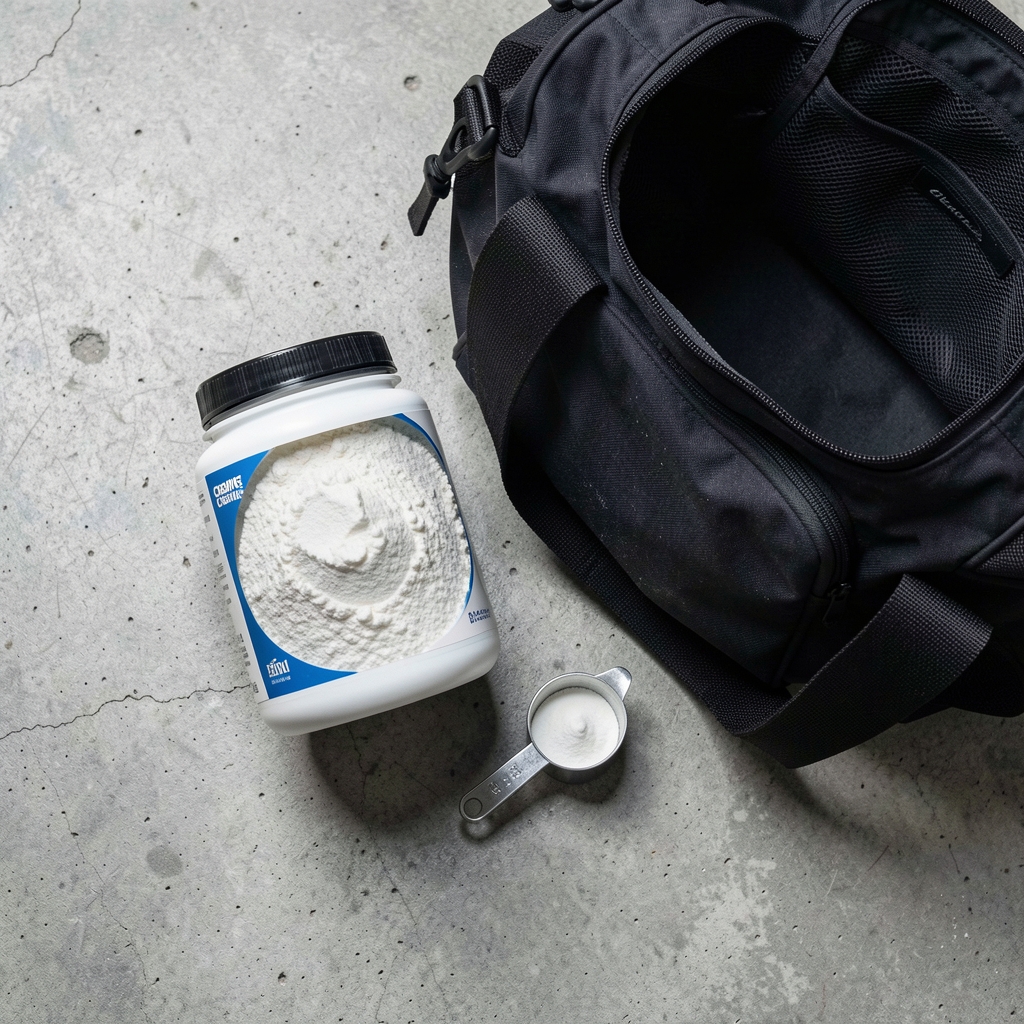
Creatine monohydrate has accumulated one of the most extensive research records of any nutrient in men's sports and active lifestyle supplementation. The volume of published studies — estimated at over three hundred peer-reviewed papers examining creatine's relationship with physical output in various populations — makes it an unusual case in the supplement landscape: a nutrient whose editorial coverage can actually be anchored to a substantial published body of evidence rather than marketing claims. This review considers what that body of research observes, where the evidence is strongest, and what active men in Indonesia should understand about creatine's place in a supplement stacking routine.
The published literature on creatine monohydrate consistently observes that it supports physical output over time in resistance training routines. The mechanism is well-described: creatine is stored in muscle tissue as phosphocreatine, which the body uses to regenerate adenosine triphosphate (ATP) during high-intensity, short-duration effort — the kind that characterises weight training, interval work, and explosive movement patterns. Supplementing creatine raises the phosphocreatine stores in muscle, which the research associates with an increased capacity for that kind of repeated high-intensity effort.
The published evidence on this relationship is notably consistent. Meta-analyses reviewing multiple studies on resistance training and creatine supplementation report that subjects supplementing creatine show greater improvements in strength-related output measures than control groups. The effect size is modest but well-replicated — which in nutritional research is the more meaningful designation. A consistent modest effect across many studies carries more editorial weight than a single large effect in one study.
It is worth noting what the research does not observe with the same consistency. Creatine's relationship with endurance-based activities — longer-duration cardiovascular effort — is less clear in the published literature. The ATP-regeneration mechanism that underlies creatine's observed effects in resistance training is less relevant over sustained, lower-intensity effort. Men whose primary physical activity is running, cycling, or similar endurance-focused training will find a thinner evidence base for creatine's role in their routine. This does not mean it has no place — but the editorial recommendation of this journal is always to follow the evidence rather than the marketing register.
Creatine occupies an interesting position in the men's supplement stacking research: it is typically introduced after a foundational vitamin and mineral stack has been established rather than as a first addition. The reasoning documented in published habit research is practical rather than strictly physiological — creatine's effects on physical output are most clearly observable when the nutritional baseline is already sound, and men who introduce it before addressing micronutrient gaps may find it harder to attribute any changes in daily performance to the creatine specifically.
Dosing patterns in the published literature cluster around a daily maintenance intake of three to five grams of creatine monohydrate. Some loading protocols — using higher doses over an initial week to saturate muscle stores faster — appear in the older research literature, but more recent publications suggest that a consistent daily maintenance dose achieves similar saturation levels over a longer period without the gastrointestinal discomfort that some men report with loading. For an editorial review aimed at active men building a sustainable stacking routine, the maintenance approach is the more practical recommendation.
Timing notes in the research are less definitive than for fat-soluble nutrients. Some studies favour post-workout timing; others find no significant difference between morning, pre-workout, and post-workout intake. The editorial observation here is that consistency matters more than timing. The research on creatine saturation in muscle tissue indicates that the benefit accumulates over weeks of consistent daily intake rather than depending on precise timing relative to exercise. This makes it a natural addition to an existing morning supplement routine.
"Three hundred published studies is not a marketing figure. It is a research record that most nutrients never approach. The evidence base for creatine in resistance training is among the most consistent in nutritional science."
Marcus Chen — Oranev Journal
Active men in Indonesia encounter creatine in two contexts: imported supplement products and a growing domestic sports nutrition market. The quality of creatine monohydrate is relatively standardised across reputable sources — the compound is chemically simple, and third-party testing for purity is more accessible for creatine than for more complex nutritional products. Men building a stacking routine should look for creatine monohydrate specifically, as this is the form with the most published research support.
Dietary creatine from food — primarily red meat and fish — provides a baseline, but at levels below what the research on supplementation examines. Men who consume red meat regularly have somewhat higher baseline creatine stores; those who follow predominantly plant-based diets may observe more pronounced responses to supplementation, as the research on vegetarian and vegan athletes suggests. Indonesian dietary patterns, which commonly include tempeh, tofu, and fish alongside meat, create a varied baseline that makes dietary intake difficult to estimate without more detailed dietary assessment.
The combination of creatine with protein intake — particularly post-exercise protein — is a frequently observed stacking pattern in the literature. The reasoning is that creatine supports the physical output during training while dietary protein supports the subsequent recovery and adaptation. Protein and daily performance are complementary rather than competing priorities in a well-constructed active men's nutritional approach. The published research on creatine does not require simultaneous protein supplementation for its observed effects, but the combination reflects a coherent nutritional logic that the editorial team finds well-supported in the literature.
A thorough editorial review of creatine requires acknowledging where the published evidence becomes thinner or less consistent. The research on creatine and cognitive function — specifically focus and daily energy awareness — is growing but not yet as well-established as the physical output literature. Some published studies observe associations between creatine supplementation and cognitive performance, particularly in states of sleep deprivation or mental fatigue, but the evidence base is smaller and the methodologies more variable than in the resistance training literature.
The research on long-term supplementation — periods of five to ten years or more — is also limited, largely because sustained longitudinal supplement research is expensive and methodologically challenging. The published literature on creatine safety over shorter periods (one to five years) is broadly reassuring, with well-tolerated profiles in healthy adults, but the editorial position of Oranev Journal is that readers approach long-term supplementation with awareness of the limits of current evidence rather than regarding short-term safety data as definitive for all time horizons.
Men with specific kidney or renal concerns — an area where a small amount of older research raised questions that subsequent studies have largely not confirmed in healthy individuals — are among those the journal recommends speaking with a qualified wellness professional before introducing creatine or any new supplement to their daily routine. The published consensus on creatine in healthy active men is positive, but individual contexts vary.
The editorial position arrived at after reviewing the published literature is that creatine monohydrate earns its place in a men's active lifestyle supplement stack through the consistency and breadth of its published research record. It supports physical output over time in resistance training routines, which is the specific claim most rigorously tested and most consistently supported. It stacks well with protein intake for daily performance, with a vitamin D and magnesium base for broader nutritional support, and with omega-3 for joint comfort awareness.
What it is not, and what the research does not claim, is a shortcut to physical output or a substitute for progressive resistance training habits, adequate recovery, and sound whole-food nutrition. The men who appear most in the published literature on creatine supplementation are those who train consistently, eat a varied diet, and use creatine as an addition to a well-constructed routine rather than as the foundation of it. That observation, drawn directly from the research, is the editorial conclusion of this review.

Marcus Chen is the contributing editor at Oranev Journal, covering men's supplementation habits, nutritional awareness, and active lifestyle choices across Southeast Asia. His work draws consistently on published nutritional research rather than product advocacy.
More from this author